
Traveling With the Ricoh GR IV: How to Protect Its Retractable Lens From Dust and Scratches
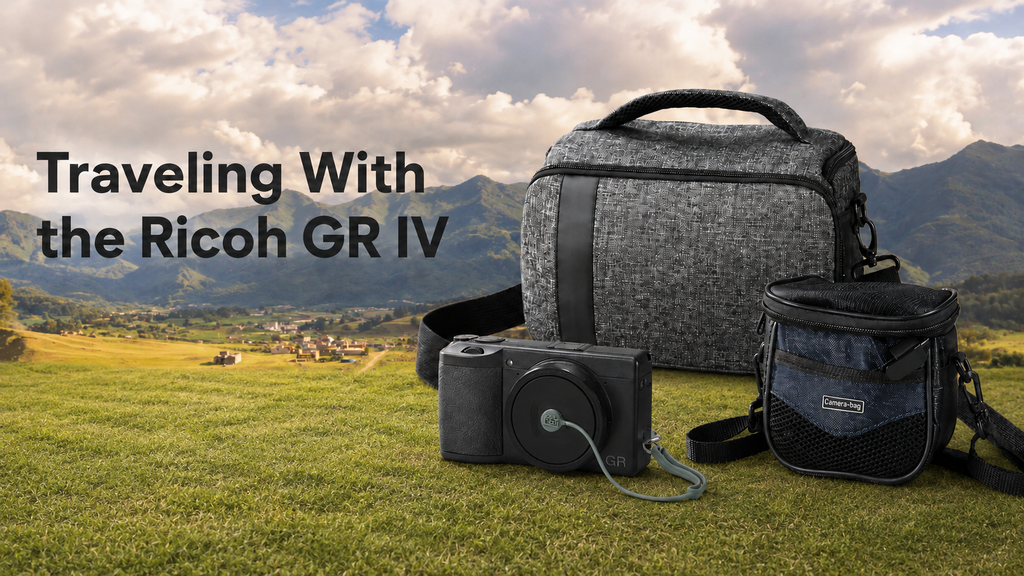
The Ricoh GR IV is built around a compelling idea: deliver the image quality of a large APS-C sensor in a camera small enough to carry almost anywhere.
That combination helped earn it the title of Best Pocketable Travel Camera in DPReview's guide to the best travel cameras of 2026. With a 26MP APS-C sensor, a 28mm-equivalent f/2.8 lens, 5-axis image stabilization, responsive one-handed controls, and 53GB of internal storage, the GR IV packs an unusually capable photography system into a truly compact body.
Its portability is also what places the camera in demanding environments. A GR IV is more likely than a larger interchangeable-lens camera to be slipped into a jacket pocket, carried loose in a daypack, or pulled out repeatedly while walking through a city. That can expose the front of its retractable lens to lint, dust, grit, fingerprints, hard objects, and everyday abrasion.
DPReview also raised a practical concern for travelers: some owners of earlier GR models reported dust entering the lens system. Ricoh says it made changes intended to help address the issue in the GR IV, but the camera does not carry a weather-sealing claim. DPReview therefore recommends using a protective bag and putting the camera away in especially unpleasant conditions.
So, how do you preserve the pocketable character that makes the GR IV such a good travel camera while giving its retractable lens better protection? The answer starts with understanding how the camera is actually carried and where its front end remains vulnerable.
Why the Ricoh GR IV Works So Well as a Travel Camera
Travel photography rewards a camera that is easy to carry and quick to use. A larger system may offer more lenses, but it can also spend more time in a hotel room or at the bottom of a backpack. The GR IV is small enough to remain close at hand.

Several features make it especially well suited to travel:
Pocketable size: The compact body is easier to carry throughout a long day than most APS-C interchangeable-lens systems.
Large APS-C sensor: It provides strong image quality without requiring a large camera body.
28mm-equivalent lens: The wide field of view works well for streets, architecture, landscapes, environmental portraits, food, and everyday travel scenes.
One-handed controls: Important settings can be adjusted quickly without slowing down the moment.
Snap Focus: Zone-focusing options support fast, discreet street photography.
Built-in storage: The 53GB of internal memory provides useful backup capacity if a card is full, unavailable, or left behind.
Image stabilization: Five-axis stabilization helps when photographing interiors, evening streets, and other low-light travel scenes.
These advantages encourage frequent use. The GR IV is not simply transported from one planned location to another; it is often carried continuously, taken out for a few frames, switched off, and returned to a pocket or bag. That repeated cycle is exactly why storage protection matters.
Pocketable Cameras Deserve Extra Protection
Calling the GR IV a pocket camera describes its size, not the cleanliness or safety of the pocket around it.
A typical jacket pocket or daypack may contain:
Fabric fibers and lint
Dust and dried dirt
Sand or other fine particles
Keys, coins, charging cables, and metal clips
Zippers, buckles, and hard-edged accessories
Skin oils or residue from sunscreen and lotion
Even when none of these causes immediate damage, repeated contact can leave marks, transfer grime, or allow small particles to collect around the front of the camera. A loose key or metal zipper pull can also press against the lens area while the bag is moving.
Travel creates additional variables. A camera may move from an air-conditioned building into humid outdoor air, sit in an open bag near a beach, or share a backpack compartment with snacks, maps, cables, and souvenirs. The GR IV's size makes these situations convenient, and convenience should be paired with a simple protection routine.
Understanding the GR IV's Retractable Lens
Unlike a fixed, non-collapsing lens barrel, the GR IV lens extends when the camera is powered on and retracts into the body when it is switched off. This design is one of the reasons the camera stays so slim.
When the camera is off, the lens is less exposed than it is during shooting, but the front lens area is not the same as a rigid protective shell. The front assembly can still be exposed to dust, pocket debris, fingerprints, pressure, and contact with other objects during storage.
Because the lens is built into the camera, internal cleaning is also less straightforward than removing and cleaning a lens on an interchangeable-lens camera. That does not mean an external cap can seal the camera or guarantee that dust will never enter. It does mean that reducing unnecessary exposure during storage is a sensible precaution.
A well-fitted external lens cap adds a physical barrier over the retracted lens area when the camera is not being used.
Common Travel Risks for the Front of the GR IV
1. Dust and Pocket Lint
Small fibers and airborne dust can collect around the front of the camera when it is repeatedly placed in an unlined pocket or open bag. A full-coverage cap helps separate the lens area from this environment while the camera is stored.
2. Sand and Grit
Beach trips, desert travel, hiking trails, and windy streets introduce fine particles that can be surprisingly abrasive. A single grain trapped between two surfaces may leave a mark. In these environments, both the lens cap and its inner lining should be checked and cleaned regularly.
3. Keys, Zippers, and Other Hard Objects
The camera may fit beside other everyday items, but that does not mean they should share the same unprotected compartment. A hard external cap provides an additional layer between the retractable lens area and objects that could scrape or press against it.
4. Fingerprints and Smudges
Frequent handling makes it easy to touch the front of the camera accidentally. A cap keeps the covered area cleaner between shooting sessions and reduces the need for repeated wiping.
5. Pressure Inside a Packed Bag
A tightly packed daypack can press items together as the wearer walks. A rigid cap cannot make the camera impact-proof, but it provides more structural protection than leaving the lens area uncovered.
Lens Cap, UV Filter, or Camera Case: Which Does the GR IV Need?
No single accessory addresses every travel risk. The best choice depends on how the camera is used and carried.

These options are not mutually exclusive. A traveler might use a lens cap and wrist strap for city walks, then place the capped camera inside a soft case or dedicated bag during transit.
When a Lens Cap Makes the Most Sense
A removable full-coverage cap is particularly useful if you:
Carry the GR IV in a jacket pocket or small day bag
Prefer not to keep a UV filter mounted
Want to preserve the camera's original compact profile while shooting
Frequently switch the camera off and store it between locations
Want a physical barrier against lint, debris, and hard objects
When a Filter or Case May Be Better
A filter system may suit photographers who want continuous front-element coverage while the camera is operating or who already use creative filters. A soft case or camera bag is the better choice in rain, blowing sand, or other conditions where the whole camera needs protection.
A lens cap should not be treated as weather sealing. If conditions are severe, put the camera away in a suitable protective bag.
A Practical Lens Protection Option for the Ricoh GR IV
If you regularly carry the GR IV in a pocket or travel bag, a camera-specific cap with a soft interior and quick removal may be more practical than a complicated protection system. For this type of compact storage protection, we recommend the Foto&Tech Aluminum Lens Cap for Ricoh GR IV with Silicone Lens Cap Keeper. It is designed for the Ricoh GR IV lineup, including the GR IV HDF and GR IV Monochrome.
The cap combines a rigid exterior, soft lining, and loss-prevention feature for everyday storage after the camera is turned off:

Anodized aluminum alloy exterior: Provides a rigid layer over the retracted lens area and offers a finish that complements the GR IV's understated design.
Soft EVA velvet lining: Cushions the contact area and helps prevent the metal cap from rubbing directly against the camera.
Secure friction fit: The cap presses over the retracted lens area and stays in place without filter threads.
Quick pull-off access: The cap can be removed with a simple pull when it is time to shoot.
Full front coverage: Helps shield the covered area from dust, dirt, grit, fingerprints, smudges, and everyday contact during storage.
Silicone lens cap keeper: Helps reduce the chance of leaving or dropping the cap while traveling.
The cap is designed to fit directly over the camera's retracted lens area. It is a practical choice for photographers who want to preserve the GR IV's original compact profile without leaving a filter adapter or larger accessory system attached while shooting.
How to Install and Use the GR IV Lens Cap

Clean the aluminum exterior and EVA lining with a dry or lightly damp microfiber cloth. Avoid harsh chemicals, and allow the cap to dry completely before placing it back on the camera.
When You Need Full-Camera Protection: Choosing a Camera Bag
A lens cap primarily protects the GR IV's retracted lens area. It does not fully cushion the screen, controls, or camera body. For flights, road trips, crowded daypacks, and changing weather, it is useful to place the capped camera inside a dedicated padded bag.
Start by considering how much gear you normally carry. A compact bag is easier to manage when you only need the camera and a few essentials. If you also carry a charger, spare batteries, cables, and cleaning tools, look for adjustable compartments and several pockets. For these two common travel setups, we recommend the following Foto&Tech options.
When Carrying Extra Gear: Medium Bag with Rain Cover
The Foto&Tech Medium Bag with Rain Cover for Small to Medium Camera is well suited to travelers who carry the GR IV with several accessories and want organized storage with added protection for changing weather.

Adjustable interior compartments: Detachable dividers let you organize the camera, charger, spare batteries, cables, cleaning tools, and other compact accessories.
Six mesh pockets: Small items remain visible and easier to reach instead of collecting at the bottom of the bag.
Padded construction: Layers of cotton and polyester fabric help cushion the camera against bumps and movement during transport.
Concealed rain cover: The built-in cover adds protection when rain becomes heavier, while the main bag is designed to handle light drizzle.
Travel-friendly carrying options: Use the top handle, wear the shoulder strap, or attach the bag to carry-on luggage.
This bag is especially useful for air travel, road trips, or day trips when the camera needs to share space with several accessories. The adjustable interior also helps keep hard items separated from the camera rather than allowing them to rub against the lens cap, screen, or body.
For Lightweight Everyday Carry: Nylon Camera Bag with Strap
If you mainly carry the GR IV and a few small essentials, consider the Foto&Tech Nylon Camera Bag with Strap. It is a simpler, more compact option that does not add the noticeable bulk of a larger camera bag.

Durable nylon exterior: Provides a practical outer layer for everyday city walks, sightseeing, and casual travel.
Padded interior: Helps protect a point-and-shoot or compact camera from routine bumps and contact inside the bag.
Multi-use strap: Offers flexible carrying options while keeping the camera separate from keys, coins, and other pocket contents.
Exterior mesh pocket: Provides quick access to a small accessory such as a cleaning cloth, spare battery, or short cable.
Compact dimensions: The bag measures approximately 6.0 × 3.25 × 5.0 inches, making it easy to carry without turning the GR IV into a bulky travel system.
This option makes the most sense for street photography, short outings, and travelers who prioritize quick access and a smaller load. If the camera has an adapter, filter system, grip, or other accessory attached, check the assembled camera dimensions before choosing a bag.
Which Bag Should You Choose?
The Medium Bag with Rain Cover is the better fit if you carry several accessories, want adjustable compartments, or expect changing weather. The Nylon Camera Bag with Strap is worth considering if you mainly carry the GR IV and a few essentials and want a compact everyday solution.
Neither bag changes the camera's lack of a weather-sealing claim. Keep openings securely closed, use the rain cover when appropriate, and put the camera away when conditions become unsafe.
Building a GR IV Protection Setup for Different Trips
City Travel and Street Photography
Use a lens cap and wrist strap while walking. Keep the camera in a clean, dedicated pocket rather than next to keys, coins, or a phone charger. Remove the cap before powering on when you reach an active shooting area.
Flights and Road Trips
Place the capped camera inside a padded compartment. The cap protects the lens area, while the surrounding bag helps protect the screen, controls, and body from other luggage. If you are also carrying batteries, cables, or cleaning tools, the Medium Bag with Rain Cover offers adjustable dividers and multiple pockets to keep those items separated.
Beaches, Deserts, and Dusty Trails
Use the cap during storage, but do not rely on it as a sealed barrier. Keep the camera inside a closed bag when wind is carrying sand or dust. Before reinstalling the cap, check both the camera and lining for particles that could become trapped between surfaces.
Rainy or Humid Conditions
The GR IV does not have a weather-sealing claim, and a lens cap does not change that. Use an appropriate protective bag and put the camera away when conditions become unsafe. For trips with uncertain weather, the concealed cover in the Medium Bag with Rain Cover provides an additional layer of protection during transport.
Frequently Asked Questions
Does the Ricoh GR IV need a lens cap?
Not every owner will use one, but a cap is a practical addition for photographers who regularly carry the camera in a pocket, backpack, or travel bag. It adds a physical barrier over the retracted lens area while the camera is stored.
Can a lens cap prevent all dust from entering the GR IV?
No. An external cap can reduce direct exposure to dust, lint, and debris while the camera is stored, but it cannot seal the camera or guarantee that internal dust will never occur.
Can I turn on the GR IV with the cap attached?
The cap should be removed before powering on the camera so the retractable lens can extend without obstruction.
Can the Foto&Tech cap be used over a filter adapter?
It is designed to press directly over the camera's retracted lens area. The product instructions specify removing aftermarket adapter rings before attaching the cap.
Will an aluminum cap scratch the camera?
The soft EVA lining is designed to prevent direct metal-to-camera contact. Keeping that lining free from sand and grit is important, since trapped particles can be abrasive regardless of the cap material.
Protect the Portability That Makes the GR IV Special
The Ricoh GR IV succeeds as a travel camera because it combines serious image quality with a body photographers are willing to carry every day. Its retractable lens is central to that compact design, but frequent pocket and bag storage also makes thoughtful protection worthwhile.
A lens cap cannot make the GR IV weatherproof, eliminate every dust risk, or replace a protective bag in harsh conditions. What it can do is create a simple barrier between the retracted lens area and the lint, grit, fingerprints, and hard objects encountered during ordinary travel.
A practical approach is to combine different levels of protection based on how the camera is carried. During everyday storage, a properly fitted lens cap can reduce direct contact between the lens area and dust, lint, or hard objects. For longer transportation or trips with more accessories, add a padded camera bag. The Foto&Tech aluminum lens cap helps preserve the GR IV's compact profile, the Nylon Camera Bag suits lightweight everyday carry, and the Medium Bag with Rain Cover is better suited to organized accessory storage and travel in changing weather.